
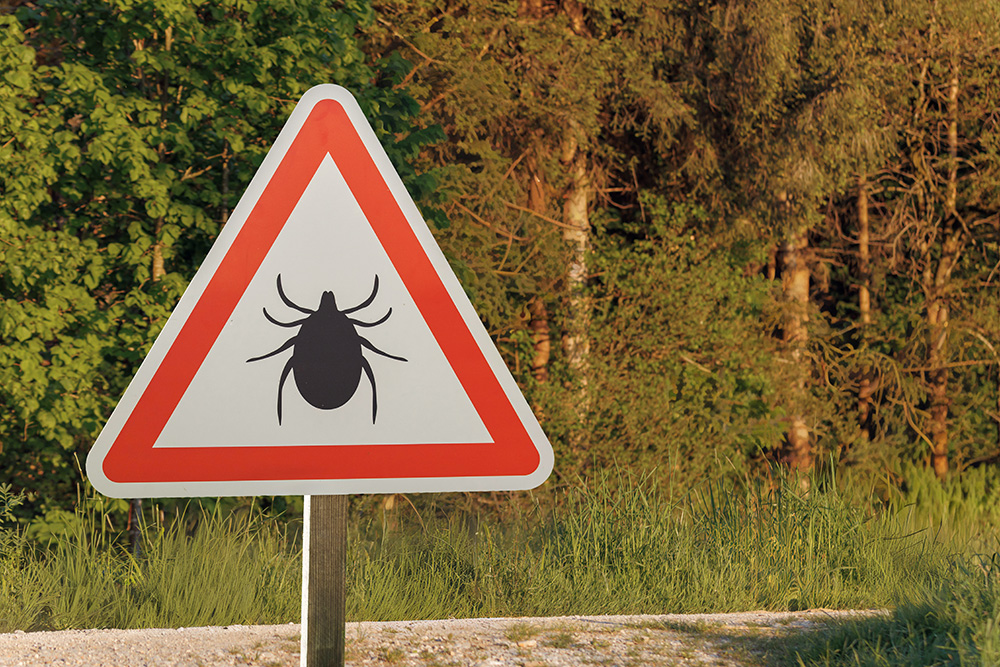
Tick season officially peaks from April through September. Common tick bite symptoms include fatigue, fever, headache and a rash — and they can appear days or weeks after the bite, which is why so many cases get missed early. But the calendar is a bit misleading on this one. Ticks don’t go dormant in October – or in November, for that matter. As long as temperatures hold above freezing, they stay active, and they’re still very much a threat. Across most of the country, that pushes the season deep into late fall, and in southern states, it runs nearly year-round.
The hard part about tick bites is that victims don’t even know they’ve been bitten. Ticks are very small, they usually latch on in areas that are hard to see, and the bite itself is painless. By the time any symptoms actually start to appear (fatigue, fever, a rash), days or weeks may have already passed since it happened. That time gap is a big part of why tick-borne illnesses get misdiagnosed as much as they do, and it’s also why a full picture of the symptoms matters.
If you or someone you love is experiencing signs and symptoms of a tick bite, visit Oxford Urgent Care located in Oxford, Mississippi for quality care.
Tick-Borne Illnesses That Are Easy to Miss
Lyme disease is the best-known tick-borne illness in the United States and the numbers do back that up. The CDC reports tens of thousands of confirmed cases every year, with Pennsylvania, New York and New Jersey usually near the top of that list. A bull’s-eye rash around the bite site is probably the most recognizable symptom, though quite a few who get Lyme never actually develop one.
Rocky Mountain Spotted Fever is less common and also harder to predict. Most cases are concentrated in states like North Carolina, Oklahoma and Arkansas, even though the name implies otherwise. Symptoms include a fever and a headache, and a rash usually follows within a few days.
Alpha-gal Syndrome works a bit differently than either of them. A single bite from a Lone Star tick can trigger a full red meat allergy – and for some, that allergy never goes away. A person who spent their entire life eating steaks and burgers without any problems could start breaking out in hives after a meal months later.
What makes this easy to underestimate is how common the exposure tends to be. A short walk on a wooded trail or through a grassy field is all it takes. Lyme disease symptoms can take weeks to show up, so the connection to a recent hike can be hard to piece together. Rocky Mountain Spotted Fever is more aggressive – symptoms can hit within just a few days. Alpha-gal reactions might not surface until the next time that you sit down for a steak dinner. These illnesses each run on their own timeline and the time between the hike and the first symptom is part of what makes tick-borne illness easy to dismiss.
Symptoms That Need Urgent Medical Care
Most symptoms after a tick bite aren’t worth a same-day ER visit. A few of them are a different story. A bull’s-eye rash is one of the bigger red flags. It’s that circular ring that spreads outward from the bite site, and it’s a sign that you should be seen promptly. Don’t wait it out if you see that. Get to a doctor that same day.
Plenty of patients write this off as a summer cold or mild dehydration. That delay is what gives some tick-borne illnesses the window they need to get worse. A very bad headache or muscle aches that feel way out of proportion to what your hike would explain are worth at least a quick call to your doctor.
Early Lyme disease tends to look and feel a lot like the flu. Fatigue, body aches and a low-grade fever are pretty vague symptoms on their own, it’s a big part of why so many cases get missed in the early stages. Many patients don’t even know they have it until the infection has already progressed. If that cluster of symptoms shows up within a few weeks after an outdoor trip (even if you never spotted a tick bite) it’s worth bringing up with your doctor.
A couple of symptoms will push this from “call your doctor” territory straight into “go to the ER” territory. Facial drooping or partial paralysis on one side of the face can be a sign that the infection has started to reach the nervous system, and at that point an emergency visit isn’t optional. Any confusion or an unusual difficulty thinking straight after a tick bite falls right into that same category. These aren’t the symptoms where you can afford to wait a day or two, so get there as soon as you can.
Pull a Tick Out the Right Way
A tick on your skin is an unsettling sight to find, and your first instinct is to get a little worried about it, which is an understandable response. The great news is that the removal is simple.
Fine-tipped tweezers are the right tool for this, and the fine tip part actually matters. Get them as close to your skin as possible, right at the base of the tick, and pull straight up with steady pressure. No jerking, no twisting, just a calm and firm pull upward. That’s all it takes.
People run into problems when they try to get creative with the removal. The urge to twist the tick, apply heat to it or coat it in petroleum jelly is understandable. But all three are extremely common mistakes. Any of these methods could push the tick to release more of its saliva or gut contents directly into the bite. Straight up and out is the only strategy that works.
Once the tick is out, don’t toss it just yet. Drop it in a sealed bag or at least snap a photo of it before you throw it away – and hold onto either one for at least a few days. Should you start to feel a bit off in the days after, that tick (or even just a decent photo of it) gives your doctor something to work with.
A little redness right around the bite after the removal is normal – no need to worry about that. What to watch for over the next few days is a rash that spreads outward from the bite or any symptoms that feel flu-like – fever, fatigue, body aches and the like. Those are the signs that something more could be going on, and at that point, a call to your doctor is the right move.
How to Keep Ticks Off Your Skin
Ticks don’t fall from trees – they hang out in tall grass and low brush, right at the very tips of stems and leaves, and they wait for an animal or a person to brush past them. One of the easiest moves you can make is to walk right down the center of the trail and stay away from the vegetation along the edges.
What you wear matters just as much as where you walk. Light-colored clothing makes it much easier to see a tick before it gets to your skin, and with your pants tucked into your socks, there’s no gap for it to crawl underneath your clothes without you ever knowing. Neither one of these is a big ask when you’re out there, and yet the two of them can really pay off.
DEET-based repellent should go on before you head out, and it’s worth being careful about where you apply it. Most hikers hit their arms and legs and stop there. But your shoes and ankles are actually among the most common entry points for ticks, and those are the areas that usually get missed. Give them a generous coat and don’t hold back. Permethrin-treated clothing is also a great addition, because it holds up through multiple washes and stays helpful trip after trip.
The last step (and probably the one most hikers rush through or skip altogether) is a full-body tick check right when you walk in the door. Do one pass when you first come in, then do a second one later that evening. Ticks can be remarkably small and easy to miss on the first go – it’s why two rounds beat one every time. The areas that deserve extra attention are behind your knees, along your hairline, around your waist, and under your arms. Make that a habit after every outing and you’ll be more likely to catch anything that slipped past your other defenses.
How Your Doctor Tests and Treats Tick Bites
Doctors won’t always wait on lab results before they start treatment and in most cases, that’s just the right call. With tick-borne illnesses like Lyme disease and Rocky Mountain spotted fever, a doctor will usually go ahead and prescribe doxycycline immediately, based on your symptoms and the way that any rash looks. An early start on antibiotics does help with how fast and how well you recover.
Blood tests for Lyme disease are notoriously unreliable in those first few days after a bite. The reason is pretty simple – your body needs time to build up enough antibodies for a test to detect them. Get tested too early and the results can come back negative even when Lyme is actually present. Doctors are well aware of this, which is why many of them will go ahead and start treatment based on your symptoms and history alone, without lab results to confirm it.
The great news is that most tick-borne illnesses are very treatable – a short round of antibiotics, usually just a couple of weeks’ worth, and you’re just about back to yourself. The longer an infection sits without treatment though, the more wear it puts on your body, so a quick visit to your doctor at the first sign that something feels off is well worth your time.
If you remember a tick bite and start to feel flu-like symptoms or see a rash, don’t wait until it gets worse, go and get it looked at.
Check Your Kids and Pets for Ticks
Kids usually get tick bites on their scalp and along the hairline more than anywhere else. At their height, a child running through brush or tall grass has their head right at the level where ticks like to wait on blades of grass and low-hanging leaves. A wiggly toddler at the end of a long day is not the easiest one to check from top to bottom, but it’s worth doing every time.
To check a child’s scalp, part the hair into sections with your fingers and work your way from the front hairline toward the back. A fine-tooth comb is also a big help for thicker hair, so you don’t accidentally skip over sections. Lighting matters quite a bit, try to do this near a bright window or grab a flashlight if you need one.
After any time outdoors, your dog should have a once-over as well. Ticks love to hide deep in the fur, around the ears, between the toes and right under the collar are the places that are easy to miss. The part that bothers most families is that a tick can move from your pet’s coat onto the furniture, the bedding or onto a person, all before it ever gets a chance to latch on. A quick word with your vet about tick prevention products is one of the best moves that you can make for the whole household.
The best way to make a tick check a habit is to work it into what everyone does the second they walk in the door after a hike or a day in the yard. Once it’s just part of the day, the whole family will come to expect it, and it won’t feel like extra work.
Same-Day Answers, No Appointment Needed
Most people who spend time on the trails this summer are going to come home just fine, and with good reason. A little prep before you head out, a quick check once you’re back and an eye on how you feel for the next few days is all it takes to stay ahead of any problems.
Matters like tick checks, blisters or a twisted ankle can seem minor. But they are worth keeping an eye on. A small cut in the wrong place or a bite that goes unnoticed can turn into something more if it does not get taken care of. If something does not look right or starts to feel worse instead of better, that’s the time to get it looked at. An early visit is usually the easier path compared to waiting to see how it goes.
Sometimes you just want to know that you are okay – and a straight answer the same day makes it even better. Oxford Urgent Care is open seven days a week, from 8 a.m. to 7 p.m., at 1929 University Ave. in Oxford. With on-site X-ray equipment and experienced providers on staff, we’re a great option for those who want answers fast and without a long wait. No appointment is needed, no referral is needed, just walk in.