
Scarlet fever sounds like something from an old novel, yet it still turns up in classrooms today. Parents who’ve been through it often sum it up as strep throat with a rash, which is close to the truth. Both come from the same bacteria, with a rough, red rash setting scarlet fever apart.
Its early signs can pass for the flu, which makes it easy to miss at first. When strep seems likely, Oxford Urgent Care can swab your child’s throat and often have results before you leave.
What is scarlet fever?
Scarlet fever is an infection caused by group A strep bacteria. Anyone can catch it, though it’s most common in kids ages 5 to 15 and less common in toddlers, according to the CDC.
The bacteria pass easily through close contact, so a single case in an Oxford classroom or day care can quickly turn into several. The name may sound frightening, but scarlet fever usually responds well to treatment.
How scarlet fever symptoms develop
Expect symptoms to show up two to five days after your child has been exposed. Most kids move through them in a similar order, though not every child does.
Sore throat and fever
Your child may complain that swallowing hurts, or you might notice them pushing food away at dinner. A fever often comes with it, sometimes climbing past 101 degrees and bringing chills.
If you peek inside their mouth, the throat may look bright red, with swollen tonsils that sometimes have white patches. Pinpoint red spots on the roof of the mouth are another clue. Strep and viral tonsillitis look a lot alike at this point, which is where a throat swab comes in.
The scarlet fever rash
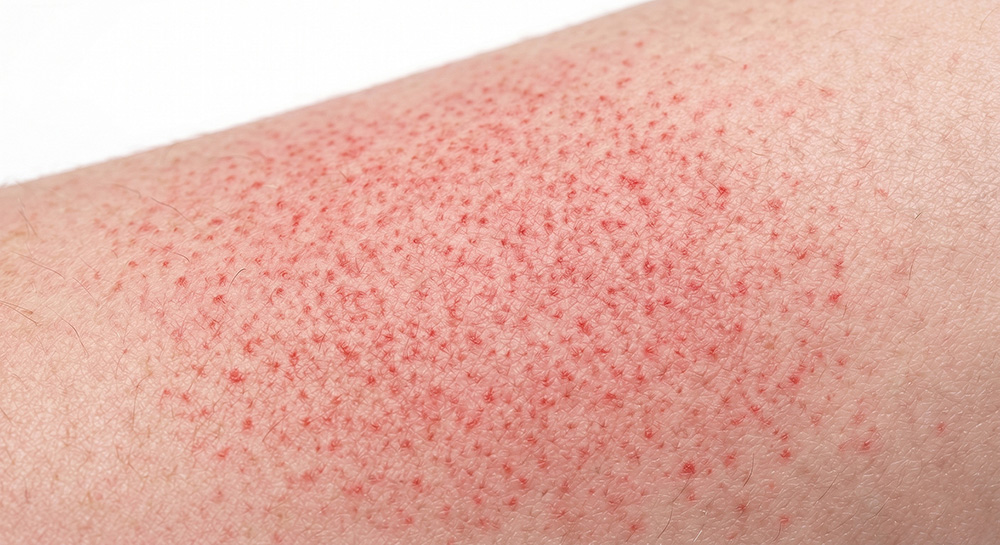
A day or two into the illness, a rash usually appears, though it can come earlier or up to a week later. It often starts around the neck and in skin folds, then spreads. The rash comes from a toxin that certain strep strains release, which explains why some children with strep throat never get it.
At first the rash can look like faint, flat red patches. Before long, it takes on a grainy texture that many parents first notice while pulling a shirt over their child’s head. People compare it to fine sandpaper, and once you’ve felt it, you won’t mistake it for much else.
Strawberry tongue and flushed cheeks
Early on, your child’s tongue may look coated in white. A few days later the coating can give way to a red, pebbly surface, which is where the name strawberry tongue comes from. Your child’s cheeks may also look flushed, with a pale ring around the mouth.
Symptoms that don’t look like strep
Not every child complains about their throat. Some start out with what seems like a stomach bug instead. According to MedlinePlus, these signs can also point to scarlet fever:
- Headache or aching muscles
- Vomiting
- Belly pain
A fever with any of these, followed by a rash a day or two later, is a good reason to get your child tested for strep.
How scarlet fever spreads
Scarlet fever is certainly contagious. The bacteria ride along in the droplets your child coughs or sneezes into the air. Siblings are especially prone to catching it, since the infection frequently moves through a household. In the days after a diagnosis, watch the rest of the family for a sore throat or fever.
Give your sick child their own cup and toothbrush and wash their dishes thoroughly. Frequent handwashing helps everyone in the house, including you.
Scarlet fever treatment: Antibiotics and home care
If your child’s strep test comes back positive, expect a course of antibiotics, often for about 10 days. Even if your child perks up quickly, give every dose exactly as prescribed. If they aren’t improving after two days, call us.
At home, cool drinks and soft foods like yogurt or applesauce can make swallowing easier. You can ease fever and throat pain with acetaminophen or ibuprofen. Our team can tell you which dose fits your child’s age and weight.
Potential complications of scarlet fever
Most children bounce back fully once they start on antibiotics. According to Cleveland Clinic, scarlet fever seldom becomes serious if treated early, although some children may develop an ear infection or pneumonia.
Rheumatic fever helped give scarlet fever its old-fashioned reputation. Today it’s uncommon in the U.S., largely because antibiotics stop the strep infection that triggers it. That protection relies on completing the prescription, even once the rash has gone away.
When to bring your child in for scarlet fever
You don’t need to wait for every sign to appear, since a strep test is how providers confirm scarlet fever. Bring your child to Oxford Urgent Care if you notice:
- A sore throat and fever
- A rash that feels like sandpaper
- A red, bumpy tongue or flushed cheeks
- Stomach pain or vomiting with a fever
If your child struggles to breathe, can’t keep liquids down or is unusually hard to wake, call 911 or head to the nearest ER.
Frequently asked questions
Can adults get scarlet fever?
Yes, though it’s less common than in children. Parents of school-age kids face a higher risk, since they’re around sick children so often.
How long does scarlet fever last?
With antibiotics, most kids start feeling better within a few days, though the rash can take about a week to fade.
Can a child go back to school after starting antibiotics?
For the most part yes, once they’re fever-free and have had at least 12 to 24 hours of antibiotics, according to the CDC.
Why is my child’s skin peeling after scarlet fever?
Peeling around the fingertips and toes is a normal part of healing and can last for several weeks.
Can you get scarlet fever more than once?
Yes, just having it once doesn’t rule out a repeat.
Rapid strep testing at Oxford Urgent Care
When a sore throat and a new rash show up together, a strep test settles the question. Oxford Urgent Care checks children of every age, infants included. If the rapid result is negative, we may send a throat culture to the lab to be sure, since the quick test can miss strep in kids.
Our clinic sits at 1929 University Ave., near Highway 7. Walk-ins are welcome from 8 a.m. to 7 p.m., seven days a week. Come see us today or call 662-236-2232 if you have any questions.