
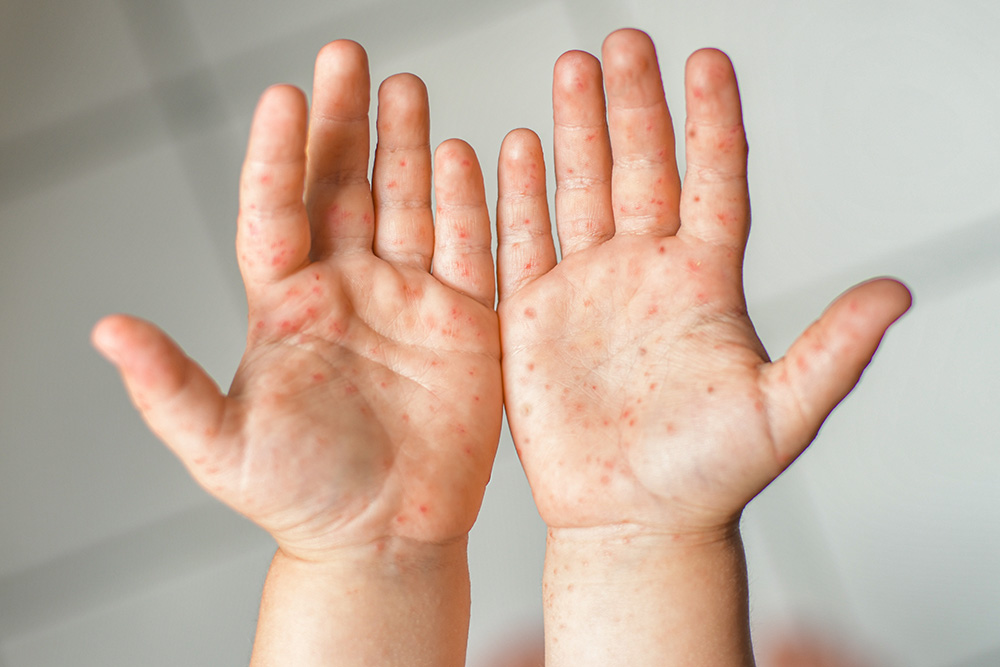
An unfamiliar rash on a toddler’s hands or feet is one of the sights that send most parents straight to a search engine. A child who suddenly won’t eat because their mouth hurts gets you there just as fast. The whole picture can be pretty unsettling when a fever spikes at two in the morning, and blisters seem to appear in a matter of hours. It only gets harder when you don’t even have a name for what you’re looking at yet.
Hand, foot, and mouth disease (HFMD) can spread fast, and by the time most parents can tell something is off, the infection is usually already a few days in. Once those sores and blisters appear, the questions pile up almost immediately. Does the whole family need to stay home? And when does a doctor visit make sense?
Those are fair questions, and the answers can keep everyone in the house safe. The encouraging news is that most cases resolve on their own with basic care at home. With the right information, each stage of the illness can become more manageable. Read on to learn about HFMD in kids, including the symptoms and treatment.
What is hand, foot, and mouth disease?
Hand, foot, and mouth disease can spread through a group of young children at a very fast pace. A family of viruses called enteroviruses is responsible for it, and of all the viruses in that group, coxsackievirus is by far the most common one, according to the Centers for Disease Control and Prevention.
Children under five years old are the most likely to get it, though older kids and adults can get it too. It can move from person to person with very little effort, which is why daycares and preschools tend to see it so frequently. The kids spend the whole day together in close quarters and share the same toys and surfaces, so germs spread quickly.
The reassuring news is that it’s one of the most well-understood childhood illnesses in the world. The National Institutes of Health (NIH) explains that millions of cases are reported every year, so pediatricians and childcare workers see it all the time. So, if your child was just diagnosed, other families are in the same situation.
What does HFMD look like?
The first hand, foot, and mouth symptoms can look like the start of a standard cold or strep throat. A fever and a sore throat are usually what show up first. According to the Mayo Clinic, those early symptoms arrive around three to six days after exposure. A few days later, a clearer picture starts to form.
Once those first symptoms show up, mouth sores and a skin rash are usually right behind them. At that point, hand, foot, and mouth disease is a whole lot easier to identify.
Mouth sores
Mouth sores are usually the first of these to show up. They appear as small and painful blisters that form:
- Inside the mouth
- On the tongue
- On the gums
- On the inner cheeks
At their worst, these blisters can be so painful that children refuse to eat or drink. When a kid won’t touch their water or finish a meal, that tends to be the point where most parents will start looking for answers.
Skin rash on hands and feet
The HFMD rash usually shows up as flat red patches or small blisters on the palms of the hands and soles of the feet. It can also spread to the buttocks. However, it isn’t usually itchy and doesn’t cause much discomfort.
What causes HFMD?
Most parents want to know how their kid caught hand, foot, and mouth disease. The virus moves from person to person through close contact, respiratory droplets, and direct contact with blister fluid. As a result, the following items can easily spread HFMD:
- Shared toys
- Doorknobs
- Communal cups
The common culprits are anything that can pass from one child’s hands to another, so good hand hygiene is important.
How long is hand, foot, and mouth disease contagious?
The CDC explains that HFMD is most contagious during the first week of illness. This part of the hand, foot, and mouth contagious period is when you need to be the most careful. The virus is at its absolute strongest during this window, and it can spread fairly fast at this stage.
However, this particular virus is a little more stubborn than most. It can stay in stool, mucus, and saliva for weeks after the symptoms have cleared up. This means a child can still carry and spread it even when they look and feel fine.
Most schools and daycares won’t let kids come back until they’ve been fever-free for at least a day and any open blisters must have dried out and crusted over. Every school does it a little differently, so a quick call ahead is always a smart idea before you make any plans.
Is hand, foot, and mouth treatment available?
Hand, foot, and mouth disease has no antiviral treatment. There is also no vaccine to stop it. For now, the main goal is to keep your child as comfortable as possible as their immune system works through it.
- Rest and plenty of fluids are the two best ways that you can help your child at home.
- A sore mouth can make mealtimes pretty uncomfortable for the little ones, so soft and cool foods are best for a tender mouth. Yogurt, applesauce, and cold smoothies are all easy options.
The CDC explains that most kids will recover on their own within 7 to 10 days. This is great news for any parent going through this with a sick child. Just keep them comfortable during this time and let their body do the rest.
Pain and fever management
Pain management during HFMD can help children get better rest, hydration, and nutrition. Acetaminophen and ibuprofen help cut back on the fever and help with the soreness in their mouth and throat. However, the Mayo Clinic stresses that aspirin should never be given to children with any viral illness due to its health risks.
Preventing dehydration
With hand, foot and mouth disease, the biggest worry for most parents is hydration. The mouth sores are painful, and most kids will refuse to drink anything because of it. Dehydration can set in pretty fast if you don’t stay on top of it.
Cold foods and drinks usually work best when the mouth is sore. Ice pops, chilled water, and cool smoothies are all much easier to get down and may soothe the irritated tissue.
Certain symptoms are signs of dehydration in children. These include dry lips, fewer wet diapers, and sluggishness, which can be signs that a child needs more fluids.
When to visit urgent care for HFMD
Most children get through hand, foot, and mouth disease at home without too many problems. However, there are a handful of warning signs to watch for.
- Dehydration is probably the biggest concern. Dry mouth, sunken eyes, and unusual drowsiness are all signs that your child isn’t drinking enough fluids, and it can turn dangerous pretty quickly.
- A fever that goes on for three or more days with no sign of improvement is reason enough to call your doctor. This is also true if a baby under three months old has any fever at all.
- You should also know that in rare cases, hand, foot and mouth disease gives your child a stiff neck, and it needs to be seen by a doctor immediately.
- It’s also wise to see a physician if your child’s other symptoms get worse instead of better.
More than anything, you know your child better than anyone, so trust your instincts about when to visit the urgent care.
Can adults get hand, foot, and mouth disease?
If your child just had hand, foot, and mouth disease, and your own throat is starting to feel a little scratchy, there’s a decent chance the two are related. Adults can also catch HFMD.
The reassuring news is that adult cases of hand, foot, and mouth disease are usually much milder but can still be unpleasant. In fact, some adults never develop symptoms at all. This last part matters because the virus can spread to others even when the carrier feels fine.
It’s important to note that anyone who is pregnant and thinks they may have been exposed to HFMD should call their doctor.
Frequently asked questions
We get a lot of questions about hand, foot, and mouth disease, so we’ve pulled together answers to some of the most common ones right here.
Can my child get HFMD more than once?
Yes, a child can come down with HFMD more than once. Several different strains of enteroviruses can cause this illness, so getting over one strain doesn’t protect against the others. This is part of why it tends to cycle through daycares and classrooms repeatedly, even among kids who’ve already had it.
How long should my child stay home from school?
Most schools and daycares ask that children stay home until they’re fever-free and any open blisters have dried over. That said, policies can differ from one facility to another, so it’s worth a quick call to confirm. When in doubt, your child’s doctor can help you figure out the right timing.
Is HFMD related to foot-and-mouth disease in animals?
No, HFMD and foot-and-mouth disease in animals are separate illnesses with no connection to each other. HFMD in children is caused by human enteroviruses like coxsackievirus. Foot-and-mouth disease in animals is caused by an entirely different virus. You cannot catch HFMD from an animal, and animals cannot catch it from you.
Can HFMD cause nail loss?
Yes, in some cases children lose a fingernail or toenail a few weeks after recovering from HFMD. However, it is generally temporary and painless, and the nail typically grows back on its own. If you notice this happening, it’s worth mentioning to your child’s doctor just to rule out anything else.
Visit Oxford Urgent Care for HFMD evaluation
Life with a sick child is stressful enough on its own. Thankfully, most children recover from hand, foot, and mouth disease and are back to their usual selves within a week or so. All they need is some rest, plenty of fluids, and a little extra comfort from those they love the most.
With that in mind, if something doesn’t feel right or you just want a professional to check your child over and give you some reassurance, you don’t have to wait days for an appointment or spend hours stuck in an emergency room. Oxford Urgent Care is open seven days a week from 8 a.m. to 7 p.m. Best of all, no appointment or referral is needed. You and your child can just walk in and get the care you need.